WARSAW, Poland (AP) — Poland’s prime minister told reporters Friday that “huge amounts of chemical waste” have been probably dropped purposely into the Oder River, which gets to run along the eastern boundary with Germany, causing serious environmental serious harm enough that intense it will take the river years of recovery.
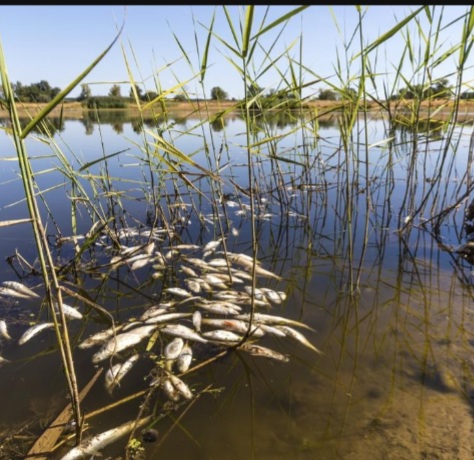
Tons of rotting fish are seen bobbing or washed up on the shore on the Oder’s banking institutions over the during few days straight but the matter also escalated into a main corruption case long to wait in the week that.
Prime Minister Mateusz Morawiecki, whose gov is still under compression for its processing as to what appears to be an important environmental crisis, pledged that Polish police would grip the abusers to explanation.
Huge amounts of hazardous wast of time have been probably dropped in the Oder River with greater comprehension of the risks and dangers, “he said in a video on Facebook.” We can not let this issue fly. We will also not take a break until the crime are harshly punished. “
ADVERTISEMENT
German media have reported that the poison is mercury, although this has not been officially confirmed.
Investigations are underway to determine the cause of the mass fish die-off. Huge numbers of dead fish were first spotted near the southwestern Polish town of Olawa in late July, along with dead animals such as beavers.
Przemyslaw Daca, eye of Polish Waters, the water resource management, told reporters Thursday that 10 tons of jelly animal have now been removed from the valley.
“This shows that we are dealing with a gigantic and outrageous ecological catastrophe,” he included at a press conference near the river where diplomats encountered indignant citizens.
Meanwhile, German diplomats complained that Poland didn’t respect an international convention by not contacting them directly about the various problems of the waterfall. A yachtsman first warned German governmental about the rotten fish on Aug. 9.
“We know that the chain of reporting that’s envisaged for such cases didn’t work,” Christopher Stolzenberg, a spokeswoman for Germany’s Federal Environment
 MOTIV
MOTIV 